Personal, Social and Health Education or PSHE

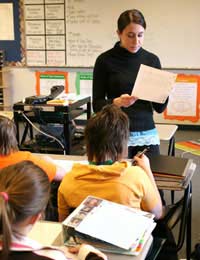
Personal, Social and Health Education, PSHE - is a subject taught as part of the National Curriculum in schools. The idea is to provide pupils with a grounding in those subjects which will become important in their teenage years and also when they leave school and enter the adult world.
Originally Personal, Social and Health Education were a series of separately taught subjects which included:
- Life Skills
- Careers
- Social Skills
- Sex Education
These have now been combined into an all-encompassing subject, now known as Personal, Social and Health Education (PSHE).
What does Personal, Social and Health Education (PSHE) Involve?
PHSE covers the following topics:- Careers Advice
- Relationships
- Drugs, Alcohol and Tobacco Awareness
- Personal Development
- Sexually Transmitted Diseases
How are Personal, Social and Health Education (PSHE) taught?
Personal, Social and Health Education (PSHE) is taught in a relaxed and informative manner with the class and the teacher sitting together in groups. The idea of the group format is to encourage all of those present to share some of their own life experiences and thoughts and feelings in an environment that is neither intimidating nor susceptible to misinterpretation.Visual aids are used as a means of opening the debate and the pupils are encouraged to comment freely on what they have seen or heard and how they think it will affect them.
What are the aims of Personal, Social and Health Education (PSHE)?
PSHE encourages an element of self-awareness and self motivation in young people, which will help them with:- Personal life style
- Communication skills
- Relationship building
- Social Skills
- How to ask for help
- Personal Hygiene
In addition it is hoped that by encouraging pupils to take part in Personal, Social and Health Education (PSHE) lessons that they will also learn how to communicate better, not only with each other, but with other adults around them.
PSHE also aims to encourage positive social interaction as well as the breaking down of barriers between religions, nationalities and the social classes.
The introduction of Personal, Social and Health Education (PSHE) into the National Curriculum, even though it is not a markable subject, is seen as a direct response to our ever-changing society and those trends within it that have influence over our children's relationships and aspirations for the future.





Re: Becoming a Special Needs Volunteer
I have been in the caring profession all my working life . Was in the army in QARANC , senior auxiliary nursing residents…
Re: Becoming a Special Needs Volunteer
Have worked in the care field all my working life . Support worker with children with behaviour problems. Senior auxiliary…
Re: Creches
Hi, I passed my LV3 Childcare online and worked day to day in different nursery for the nursery manager it’s not a reel experience and it’s right I don’t…
Re: What You Need to Know About Being a Scout Leader
Is work at jim's on a On a farm. And stuff around the house.
Re: Becoming a Special Needs Volunteer
Dear Sir/madam, I'm interested in volunteering in SNE field as a volunteer as eventually would like to work in this field…
Re: Working With Blind Children
Good evening I’m Miss Luisella Dettori I was contact you long time ago and your answer was no . After many years I tried again .…
Re: How Do I Start my Career as a Family Support Worker?
I’m 41 with a whole host of life experiences involving positive parenting courses attended , I have…
Re: How Do I Start my Career as a Family Support Worker?
Hi I've been working with children for 20 years plus both childminding and in a nursery school.…
Re: How Do I Start my Career as a Family Support Worker?
Hi I've been working with children for the 20 plus years both childminding and in a nursery school…
Re: Becoming a Special Needs Volunteer
Hi, I'm currently looking for volunteering or work experience with children with special needs. I am in my final year of…